How Often Should You Wash Your Hair If You Have Dandruff?

How Often Should You Wash Your Hair If You Have Dandruff?
If you’re dealing with flakes, itch, or an oily, irritated scalp, one of the first questions you’ll ask is: how often should you wash your hair if you have dandruff? The truth is, dandruff isn’t just a “dirty scalp” problem, it's a biological imbalance involving yeast, oil, and inflammation. And the right wash frequency can make a bigger difference than most people realize.
Most people either overwash (which dries and irritates the scalp) or underwash (which lets yeast multiply quickly). The key is finding the right routine for your scalp type and pairing it with the correct active ingredients. That’s why dermatologists emphasize understanding how often to use anti-dandruff shampoo instead of sticking to a one-size-fits-all rule.
The right frequency also depends on what’s causing your flakes whether it’s excess oil, sensitivity, buildup, or a flare-up of Malassezia-related dandruff. Wash too little, and the yeast grows unchecked. Wash too much, and your barrier gets stripped, creating more irritation and more flakes.
This guide breaks down exactly how often to shampoo dandruff, what routine works for oily or dry scalps, and how ingredient-based schedules (like Pyrithione Zinc or Salicylic Acid) can help you get results faster.
What Actually Causes Dandruff?
To figure out how often to use anti-dandruff shampoo, you first need to understand what’s happening beneath the surface. Dandruff is not caused by dirt, poor hygiene, or washing too little; it's a biological reaction involving your scalp microbiome.
A naturally occurring yeast called Malassezia globosa feeds on the oils (sebum) your scalp produces. When it breaks that oil down, it releases fatty acids that irritate the scalp in about half the population. That irritation leads to inflammation, increased shedding, and the flakes you see on your shoulders.
When this yeast–oil–inflammation cycle speeds up, your scalp becomes imbalanced. That’s why flakes return even when you wash regularly the root cause hasn’t been addressed.
Common signs of this imbalance include:
- Oily, yellowish flakes
- Persistent itchiness
- Redness or sensitivity
- Flakes returning within days of washing
- A greasy scalp paired with dryness or soreness
What Is an Anti-Dandruff Shampoo (and Why Wash Frequency Matters)?
Before deciding how often to use anti-dandruff shampoo, it helps to understand what makes these formulas different from regular cleansers. An anti-dandruff shampoo isn’t just meant to “clean” your hair, it's designed to correct the biological imbalance that causes flakes in the first place.
Anti-dandruff shampoos contain clinically proven activities like Pyrithione Zinc, Salicylic Acid, Ketoconazole, or Selenium Sulfide. Each one targets a different part of the dandruff cycle: yeast overgrowth, inflammation, excess oil, or thick, stubborn buildup. These ingredients work best when they’re used consistently and left on the scalp for the recommended amount of time.
What sets them apart from regular shampoos is that they:
- Reduce Malassezia yeast activity
- Calm inflammation and itch
- Slow down rapid skin cell turnover
- Break down stubborn flakes and buildup
- Help restore the scalp’s natural balance
That’s why dermatologists focus on matching wash frequency to scalp needs. Whether you have an oily, dry, or sensitive scalp directly affects how often you should shampoo dandruff and how fast you’ll see relief.
How Often Should You Wash If You Have Dandruff? (By Scalp Type)

How frequently you should wash depends on your scalp’s oil production, sensitivity, and how active your dandruff flare-up is. There’s no one rule for everyone but dermatologists agree that matching wash frequency to scalp type is the fastest way to calm flakes.
Below are clear routines based on the most common scalp profiles so you can decide how often to use anti-dandruff shampoo for your specific needs.
1. Oily Scalp (Most Common in Dandruff)
Recommended: 3–4 times per week
If your scalp gets greasy quickly, the yeast that triggers dandruff multiplies faster. More frequent washing keeps oil levels under control and gives active ingredients enough contact time to work.
Why this routine helps:
- Controls excess sebum (yeast’s food source)
- Minimizes rapid flake buildup
- Reduces itch and inflammation
- Prevents flare-ups from returning quickly
2. Dry or Sensitive Scalp
Recommended: 2–3 times per week
If your scalp feels tight, irritated, or easily inflamed, overwashing can make dandruff worse. You still need medicated cleansing just not as often.
Why this routine helps:
- Allows the scalp barrier to repair between washes
- Reduces dryness-triggered flakes
- Prevents sensitivity or burning
- Balances moisture with treatment
3. Normal Scalp with Mild Flakes
Recommended: 2–3 times per week
If you don’t experience extreme oiliness or dryness, a moderate routine is usually enough to keep yeast levels under control.
Why this routine helps:
- Maintains balance without over-cleansing
- Keeps flakes from returning
- Prevents irritation from overwashing
How to Use Anti-Dandruff Shampoo for Best Results (Step-by-Step Routine)
Even if you’re washing at the correct frequency, your routine matters just as much as how often you shampoo. Most people apply anti-dandruff shampoo the same way they use regular shampoo: quick, rushed, and rinsed off too soon. But medicated activities need time and technique to actually work.
Here’s the dermatologist-backed routine to follow when deciding how often to use anti-dandruff shampoo and how to use it properly:
Step-by-Step Routine
-
Step 1: Wet your scalp thoroughly
Helps the active ingredients spread evenly and prevents irritation. -
Step 2: Use a quarter-sized amount of shampoo
Add more only if you have very thick or long hair the scalp is the priority. -
Step 3: Massage into the scalp for 20–30 seconds
Focus on roots, crown, nape, and any itchy or flaky areas. -
Step 4: Leave the shampoo on for 2–3 minutes
Ingredients like Pyrithione Zinc and Salicylic Acid need contact time to work. -
Step 5: Rinse thoroughly
Leftover residue can cause irritation or buildup. -
Step 6: Follow with a hydrating conditioner (on lengths only)
Keeps hair soft without affecting the medicated treatment on the scalp.
How ByeFlakes Helps You Build the Right Routine (Shampoo + Conditioner System)
Most people focus only on how often to use anti-dandruff shampoo but the real difference comes from using the right formula and supporting the scalp barrier at the same time. That’s why the ByeFlakes system is built around a simple idea: treat the biological root of dandruff while keeping the scalp hydrated, calm, and balanced.
Unlike regular dandruff shampoos that rely on harsh cleansers or short-term relief, each ByeFlakes product is designed to work with your scalp biology, not against it.
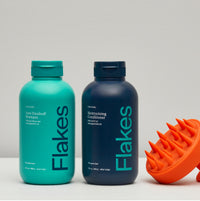
1. ByeFlakes Anti-Dandruff Shampoo (2% Pyrithione Zinc): Targets the root cause of dandruff with the highest non-prescription strength.
What it does:
- Reduces Malassezia yeast overgrowth
- Calms irritation, redness, and itch
- Normalizes rapid skin cell turnover
- Helps improve flakes within 1–2 weeks
- Gentle enough for regular use and all scalp types
Because it’s formulated with 2% Pyrithione Zinc, it stays active on the scalp longer, providing results that last beyond the wash.
2. ByeFlakes Hydrating Conditioner (MCT Oil + Barrier Support): Restores the scalp’s moisture balance without weighing down the hair.
What it does:
- Rebuilds the scalp moisture barrier
- Reduces sensitivity and tightness
- Soothes irritation left behind by flakes
- Supports overall scalp comfort
- Lightweight, non-greasy finish
Keeping the scalp hydrated is essential, especially for dry or sensitive scalps washing 2–3 times a week.
Conclusion
Dandruff isn’t just about washing more or washing less, it's about washing right. Once you understand your scalp type and the ingredients in your shampoo, it becomes much easier to decide how often to use anti-dandruff shampoo and build a routine that actually works.
For oily scalps, more frequent washing (3–4 times a week) keeps yeast and buildup under control. For dry or sensitive scalps, gentler routines (2–3 times a week) prevent irritation while still treating the root cause. And during flare-ups, temporarily increasing frequency helps bring your scalp back to balance faster. The most important thing is consistency. Even when flakes improve, sticking to a maintenance routine is what keeps them from coming back.
If you're ready to reset your scalp with a system built on clinical science, the ByeFlakes Anti-Dandruff Shampoo (2% Pyrithione Zinc) and ByeFlakes Hydrating Conditioner make it simple to start and even simpler to maintain.