Dandruff vs Dry Scalp: How to Tell the Difference

Dandruff vs Dry Scalp: How to Tell the Difference (and Fix It for Good)
You notice flakes on your shoulders and assume it’s dandruff. But here’s the truth: not every flake means dandruff. Sometimes, your scalp is just dry and thirsty, not oily or inflamed. That’s where most people get stuck. They keep switching shampoos, treating dryness like dandruff, and end up making things worse.
Dandruff vs Dry Scalp: How to Tell the Difference comes down to what’s happening beneath the surface. Both can cause itching, flakes, and discomfort but the reasons are completely different. Dandruff is a scalp imbalance driven by a natural yeast (Malassezia globosa) overfeeding on oil and triggering inflammation. Dry scalp, on the other hand, is simple dehydration: your scalp’s barrier is compromised and crying out for moisture.
Treat them the same and you’ll stay trapped in the cycle: flakes that disappear for a few days, then come right back. Knowing which one you’re dealing with is the first step toward actually fixing it and fixing it for good.
Why It Matters to Know the Difference
Treating dandruff vs dry scalp the same way is the fastest path to chronic flakes. The difference between dandruff and dry scalp directly changes how you fix a flaky scalp and whether results last.
- Using an antifungal on a dry scalp strips moisture and weakens the barrier. Flakes get worse, itch increases, and scalp hydration drops.
- Adding oils or heavy conditioners to true dandruff can feed yeast, leading to bigger, greasier flakes and persistent itch.
- The wrong routine masks symptoms, while the right routine prevents recurrence.
What correct diagnosis unlocks
- Faster relief: You’ll choose the right care on day one - how to treat dandruff (antifungal + barrier support) vs how to treat dry scalp (gentle cleanse + deep hydration).
- Long-term control: Matching care to cause breaks the recurrence cycle instead of “good week/bad week” swings.
- Product clarity: If it’s dandruff, use the best shampoo for dandruff with proven actives. If it’s dryness, prioritize scalp hydration and barrier-friendly formulas.
Dandruff vs Dry Scalp: Key Differences at a Glance
When flakes show up, telling dandruff vs dry scalp apart can feel confusing but the signs are clearer than you think. Both conditions create a flaky scalp, but the causes, triggers, and treatments are completely different. Here’s a simple breakdown to help you identify which one you’re dealing with.
| Feature | Dandruff | Dry Scalp |
| Primary Cause | Yeast overgrowth (Malassezia globosa) feeding on scalp oil | Lack of moisture + weakened scalp barrier |
| Flake Type | Large, oily, yellowish flakes | Small, white, powdery flakes |
| Scalp Condition | Oily, greasy roots; inflamed or red | Tight, dry, rough feeling |
| Common Triggers | Product buildup, infrequent washing, stress, humidity | Hot showers, harsh shampoos, cold/dry weather |
| Itch Type | Itchy + greasy | Itchy + tight/dry |
| Worsens When | You add oils or heavy conditioners (feeds yeast) | You overwash or use stripping products |
| Improves With | How to treat dandruff: antifungal actives (like Pyrithione Zinc) + barrier support | How to treat dry scalp: hydration, gentle cleansers, moisture-rich products |
How to Treat Each Condition
Once you know whether you’re dealing with dandruff vs dry scalp, choosing the right routine becomes effortless. Both conditions cause flakes but they need completely different care to actually stay under control.

If It’s Dandruff
Dandruff is a scalp imbalance driven by yeast, so the fix starts with controlling that yeast and calming inflammation not adding moisture or oils.
Here’s how to treat dandruff the right way:
- Use a Pyrithione Zinc shampoo (2% strength): This is the gold standard for dandruff care. It reduces yeast growth, eases itching, and brings your scalp back to balance.
- Wash 2–3 times per week: Enough to control oil and buildup without over-drying the scalp.
- Follow with a lightweight conditioner: This supports your scalp barrier without clogging follicles.
- Stay consistent for 2–3 weeks: Dandruff responds to consistency, not random fixes.
- Avoid oils, coconut masks, or heavy butters: These feed Malassezia and can intensify flakes.
If It’s Dry Scalp
A dry scalp isn’t about yeast, it’s about hydration. To fix dryness, you need to rebuild the scalp barrier and restore moisture.
Here’s how to treat dry scalp effectively:
- Switch to a sulfate-free shampoo: Gentle cleansers protect natural oils and prevent barrier damage.
- Use a hydrating conditioner every wash: Lightweight emollients like MCT oil help restore moisture without buildup.
- Avoid hot showers: Hot water strips oils and worsens dryness.
- Reduce washing frequency: 2–3 times a week is ideal for most dry scalp cases.
How Flakes Helps Fix Both
Whether you’re dealing with dandruff vs dry scalp, the right routine comes down to two things: resetting the scalp microbiome and rebuilding the moisture barrier. That’s exactly where the Flakes system makes a measurable difference.
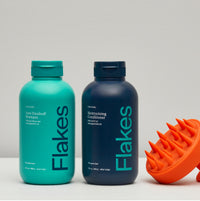
Flakes Anti-Dandruff Shampoo (2% Pyrithione Zinc)
For true dandruff, you need an ingredient that targets the root cause, yeast overgrowth. Flakes uses 2% Pyrithione Zn, the strongest non-prescription concentration, clinically proven to:
- Reduce the yeast (Malassezia globosa) that drives dandruff
- Calm inflammation and itch
- Cut down on oily, yellowish flakes
- Bring the scalp back to a balanced, healthy state
Flakes Hydrating Conditioner (MCT Oil Barrier Support)
A dry scalp doesn’t need harsher washing, it needs hydration. Flakes Conditioner uses MCT oil and lightweight emollients to:
- Restore moisture to a dehydrated scalp
- Repair the barrier so flakes don’t keep returning
- Soften hair without waxy buildup
- Keep the scalp calm, nourished, and comfortable
Why the Flakes System Works for Both Conditions
- For dandruff: it controls yeast, reduces irritation, and prevents flare-ups.
- For dry scalp: it rebuilds moisture, protects the barrier, and stops tightness + powdery flakes.
- For anyone in-between: it keeps the scalp balanced, clean, and hydrated without harsh detergents.
No sulfates. No silicones. No heavy oils. Just a routine that respects your scalp whether you’re fixing dandruff or calming a dry scalp.
Conclusion
Flakes on your shoulders don’t always tell the full story. The real fix starts with knowing whether you’re dealing with dandruff vs dry scalp, because each one needs a completely different approach. Dandruff is driven by yeast and excess oil. Dry scalp is simply dehydration. Treating one like the other is exactly why flakes keep coming back.
Once you understand the difference between dandruff and dry scalp, everything becomes easier: your routine, your product choices, and your long-term results. A scalp that’s balanced stays calm. A scalp that’s hydrated stays flake-free. And a routine that matches the cause finally ends the cycle for good.
That’s why the Flakes system was built: to help reset your scalp, repair the barrier, and keep flakes from coming back no matter which condition you started with.
Ready for a scalp that finally behaves? Start your routine with Flakes.